
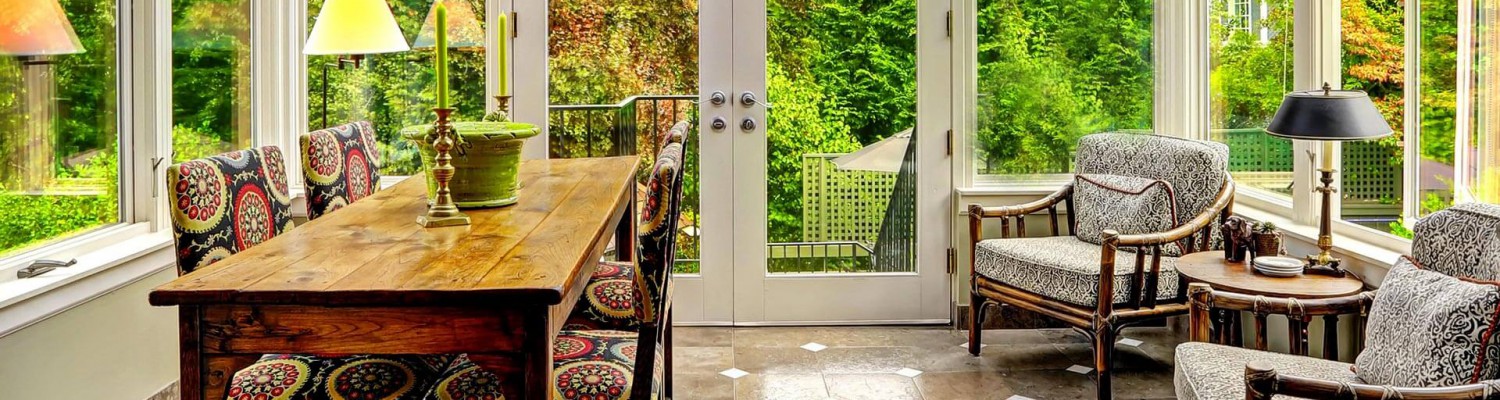
Walk down almost any residential street off Main Street in Alhambra and you will see homes with deep eaves, small windows and mature trees, built in an era when keeping the sun out was the goal. That keeps the house cool, but it can leave the interior dim. A glass sunroom on the back of the house adds the one thing many of these homes are missing: a room full of daylight.
Picking the Right Glass Room Shape
Sunroom California installs Cthru and Four Seasons sunrooms in several styles. Rather than choosing by photo, it helps to match the style to the house.
- Spanish revival or Mediterranean home: a conservatory sunroom in a Georgian design has the symmetry and detail to sit comfortably beside stucco walls and tile roofs.
- Craftsman or bungalow: a straight eave sunroom has clean lines that do not compete with the original woodwork.
- Postwar ranch: a curved eave sunroom softens the long, low profile and gives the most overhead glass.
- Two-story or remodeled home: a cathedral or studio sunroom takes advantage of taller wall space for a high ceiling.
- Victorian-influenced home: a Victorian conservatory, with its faceted end, fits the more ornate style.
Why Glass Choice Matters in the San Gabriel Valley
Alhambra summers are hot, and smog-season haze does not do much to soften the sun on a west-facing wall. The glass in every room blocks harmful UV, so rugs, wood floors and upholstery fade far less than they would behind ordinary windows. Beyond that, you have two paths:
Single pane glass is the lower-cost option. It works well for a room used as a breakfast nook or plant room in the cooler months and early mornings.
Dual pane glass adds insulation that slows heat moving through the glass in both directions. If you want to use the room on August afternoons or on a cold night in January, dual pane is the better investment. Pair it with retractable shades on the sunny side for more control.
Making It a Room, Not a Porch
A sunroom becomes part of the house when it has the same basic comforts as the rest of it. Common add-ons in Alhambra include:
- Heating and A/C, either from the home’s system or a standalone unit
- Ceiling fans to keep air moving
- Lighting and outlets with hidden wiring
- Retractable curtains or shades
Browse roof options and other features to see how each piece fits together.
Building on a City Lot
Alhambra lots are generally compact, so we plan carefully around setbacks, the garage, and side yard access. A sunroom can go on an existing concrete slab or a sturdy deck that we inspect first. Permits may be required through the city’s building department, and our estimate explains what to expect. Because every room is custom made to order, the frame color and trim can be matched to your home so the addition looks original rather than tacked on.
Tree cover is worth a look as well. Many Alhambra streets have large, established trees, and a sunroom under partial shade can stay pleasantly cool through the afternoon. The trade-off is leaves and needles on the glass roof, so we talk through placement, roof pitch and cleaning access before settling on the final layout.
Timeline and Warranty
Once your design is approved and the materials arrive from the factory, installation takes about 3 to 5 days. A conventional addition can take 6 to 9 months. Products are made in California and carry a lifetime transferable manufacturer warranty. The in-home estimate is free, and we are open 7 days a week.


